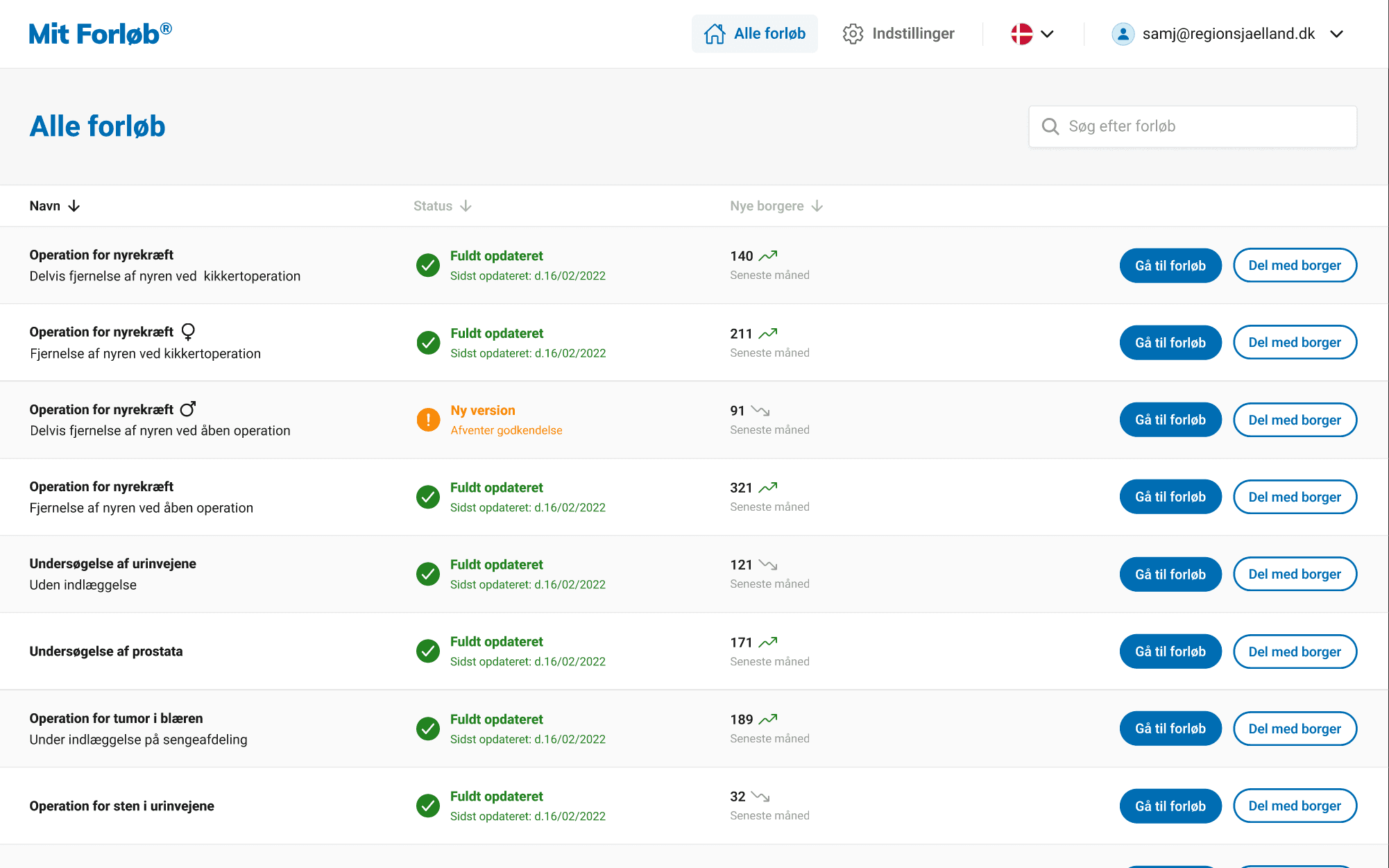
Self-service for healthcare personnel
As part of expanding its product portfolio, Visikon wanted to give healthcare professionals control over creating, managing, and distributing healthcare information. The goal was to provide self-service tools while maintaining the high content standards established by Visikon’s communication experts and animators.
Company
Visikon
My role
Research, scope and design
Time period
2023

Handing over control and offering more sharing options
The primary objective: control over the content
The primary objective was to eliminate the long waiting times whenever a customer, such as a hospital or clinic, wanted to change or add content.
Our customers’ pain points were real. They found the process of having Visikon update or modify content painfully slow. If they wanted a new “program” (Visikon’s term for a set of content explaining an examination, operation, or procedure), they had to wait for everything to be created and assembled from pieces of the content library.
The material then went out for review and came back for changes, sometimes through several rounds, before customers could finally put the content in front of their patients.
So the question was whether a self-service platform was the right answer. Letting customers create, edit, and remove content themselves would move a lot of work off Visikon’s desk. It would also turn the product into something they used regularly rather than something they waited on, making Visikon a more established part of their day-to-day operations.
The second objective: getting the information to the citizen
As I describe in my cases “Ensure Access to Health Information” and “Battling Navigation Problems” Visikon’s main goal is to provide healthcare information to as many people as possible. Those cases deal with making sure people can find their way around the material once it has reached them. This one deals with what comes before that: getting it from the healthcare professional to the citizen in the first place.
Sharing had traditionally meant handing a piece of paper to the patient. But what counts as convenient varies a lot from patient to patient, and from one situation to the next.
Visikon has customers in both the healthcare sector, such as hospital departments, and the public sector, such as municipal home nurses. Information can be shared in a citizen’s home, at a hospital information desk, or during a phone call with a doctor. One method could never cover all of that.
Bringing everything together on one platform let us open up options that had previously felt disconnected: sharing via SMS, using QR codes during home visits, and printing personalized access cards.
So we envisioned a platform that would not only support the creation, editing, and maintenance of content, but also serve as a sharing tool for healthcare professionals. That was a big shift.
The platform had real potential as a new business area for the company. But we still needed to validate whether users would see it as positively as we did.
Getting to know the details
We had plenty of user feedback and pain points to work from, but none of the users had requested a self-service platform.
However, we believed that a platform like this could benefit both the business and our users. The challenge was determining whether it would meet users’ needs and whether they would adopt it. More importantly, we needed to validate these assumptions before investing serious time and money in development.
I have faced similar challenges throughout my career. When you have an idea for a solution, simply asking users whether they would use it or whether it solves their problem is not always effective. They need to see the solution in action before they can recognize its potential.
I therefore started interviewing different types of customers, focusing on their workflows and how they create, maintain, and share materials in their line of work.
I had the honor of visiting the Heart Department at Rigshospitalet in Copenhagen. It was an incredible experience, both personally and professionally. I saw how hard these people work to help those in need and how even a small improvement in their daily routines could significantly increase their job satisfaction. It could also give them more time for what matters most: their patients.

Besides physical visits, I conducted many video interviews with people from different areas of the health sector, including nurses, doctors, home nurses, department managers, material experts, and everyone in between.
During these interviews, I learned how frustrating and time-consuming it was whenever tasks related to creating or maintaining materials had to change hands. That hand-off seemed to be the main source of wasted time.
Regarding material sharing, our main findings concerned the printed cards that staff had to give to patients. This process caused several practical challenges:
Staff sometimes forgot to bring the cards from the office to the patient, which was a heavy burden for home nurses.
Staff sometimes brought the wrong version. For example, a patient might need information about how to put on compression socks, but the available materials only covered catheter use.
Every time customers needed more printed access cards, they had to contact Visikon. Someone then had to upload the print files, place the order, arrange shipping, and distribute the cards to different offices or cars. Sometimes, this meant days of waiting and left customers with no way to share the material.
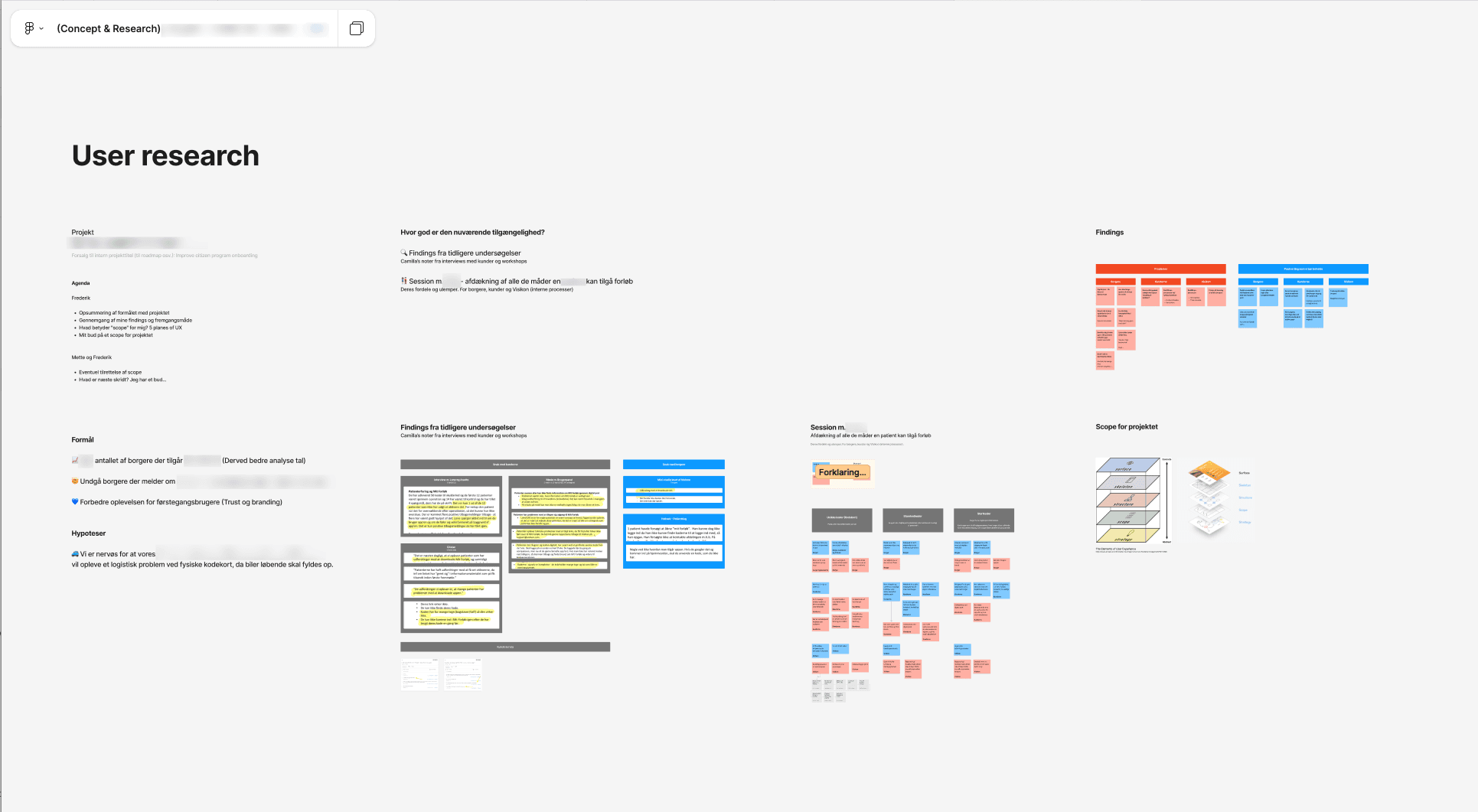
All findings were collected in a FigJam board to give an overview and present them to the stakeholders. That way we all shared the same vision before moving forward.
Shaping the vision
After gaining a better understanding of the workflows and pain points, I wanted to focus on building a prototype of the platform. The only purpose was to put something in front of our users, watch their reactions, and explore how it could fit into their daily work.
We kept the scope limited in the first version.
Users should be able to:
View their materials
Edit their materials
Create and print new access cards for offline sharing
Share materials digitally, eliminating the need for a printer or new access-card order
As with any creative process, I start by sketching, sketching, and sketching… I get my ideas out first and then decide which direction to take.


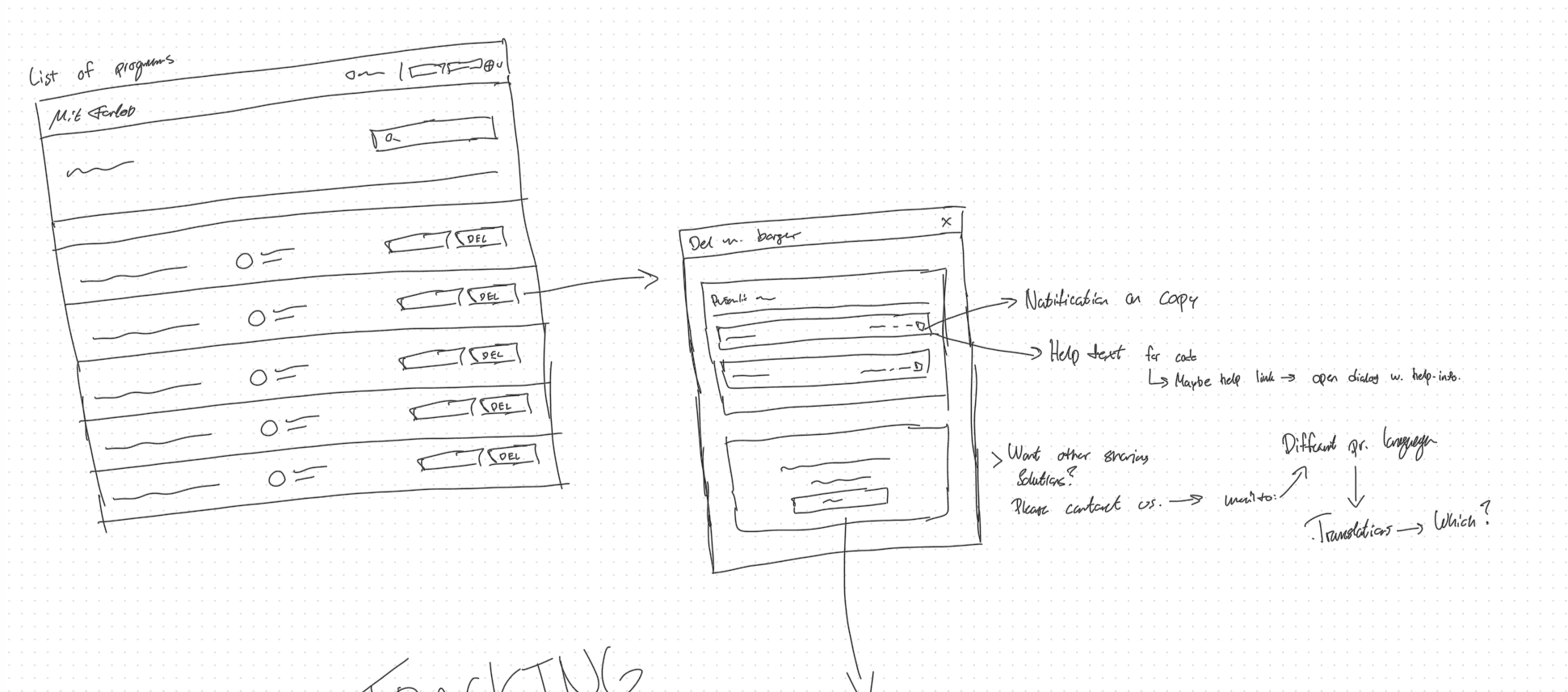
After showing some of the sketches to stakeholders and developers, we quickly agreed that the system needed to:
Provide a clear overview of the different types of materials
Enable users to share materials with just a few clicks or taps
Be efficient, while acknowledging that our users were not IT experts, so it was acceptable to compromise on efficiency if that lowered the learning curve
After these strategy and direction discussions, I started wiring up the prototype to prepare it for customer demonstrations.


Getting it in front of users
Our goal in showing this to users was not only to let them see it but to let them try it, and to test both the concept and the usability: whether it met their needs, and whether it was easy to use. I designed the interview guide to cover both, with the primary focus on validating the idea and vision.
After the interviews/tests, it became clear that this platform could eliminate many of the problems customers had described. But we also realized we might have defined the scope too narrowly.
In this prototype, users could only edit and create written content. Almost all interview and test participants mentioned the need to configure the videos as well.
In retrospect, I can see that this should have been part of the scope. Videos are the material customers believe they are paying for, and they are the core of the system.
On the positive side, we validated the vision, and we narrowed in on what mattered most to them: the videos. Being able to modify them, edit them, remove them, and add new ones was the control they really wanted.
How it ended and snapshots of the product
After validation, I spent time defining a release plan focused on getting the fundamentals right before adding more complex features. I left the company a few weeks after development began, but I did manage to start folding in the findings, including the need to let customers modify the videos themselves.
The platform was built. I don’t know how far they have taken it since, or how many people use it today. That is the one thing I would have liked to see.
Below, I’ve collected a selection of screenshots, videos, and concepts from the prototype and vision. Enjoy!