From three products to one platform
Merging three separate products into one platform that solves the same set of problems is surprisingly complex, especially when one of those products is a market leader with more than 20 years of history.
Company
BoligPortal
My role
Product Manager & Design Responsible
Time period
2019 to 2022

Fragmented data and experiences
When I joined BoligPortal, we had three products for landlords:
Marketplace: Advertising available rental properties
Rental contract builder: Helping landlords comply with Danish rental law
Moving reports: Creating detailed documentation of the property when tenants move in
These three products had:
Different databases
Different user interfaces and interactions
Different branding
As a result, we faced several problems:
Users had to set up their properties and tenants in all three products.
They had to learn how to use each product because none of them looked or worked the same way.
They did not realize BoligPortal owned all three, so they were unsure who to contact for support or sales.
The products did not work together, creating a fragmented experience instead of one coherent flow.
In addition to these user-centric challenges, we hypothesized that bringing all three products together could increase the number of contracts and moving reports created. Both were important business metrics for us.
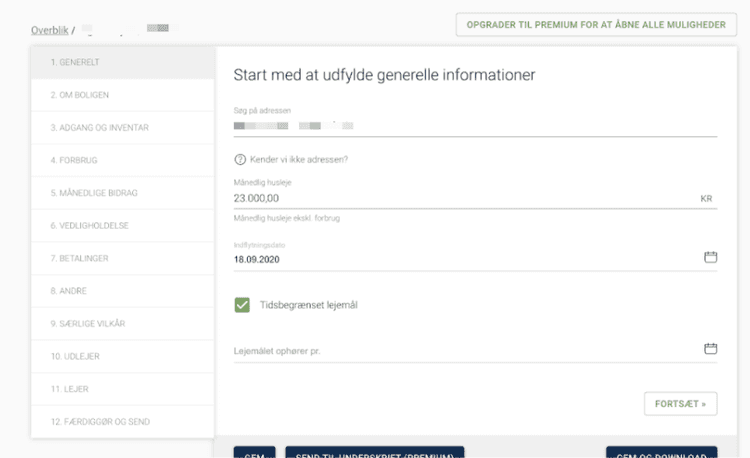
https://kontrakter.boligportal.dk/ (Year: 2020)
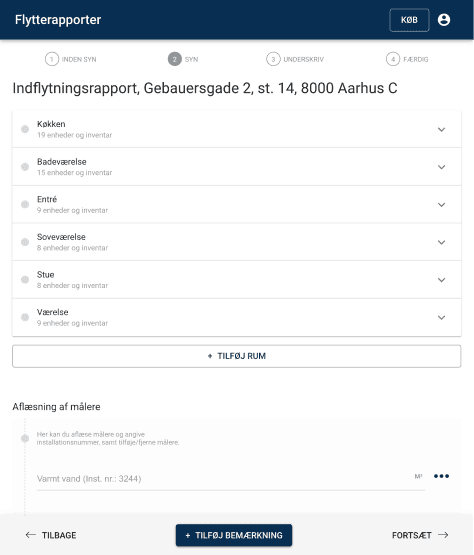
Flytterapporter.dk (Year: 2021)
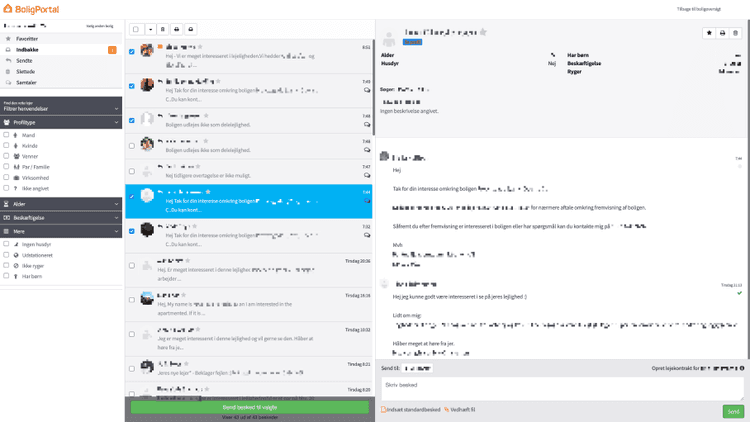
BoligPortal.dk - Landlord messaging system (Year: 2020)
Merge!
The work to merge these products ran from 2019 to 2022. At that point in my career, I was responsible for design and user experience across the company. My main focus was to create an overall vision for integrating the products while making them work as similarly as possible.
However, the marketplace had looked and functioned largely the same for more than 10 years, and users relied on it for several hours each day. We had to respect that most users had learned the platform inside out. Any significant change to it could cause real frustration.
We also had to sunset two products, Contracts and Moving Reports, and move their functionality into the marketplace. This was a risky process. If we were not careful, we could lose the early adopters of these products, especially if we compromised the user experience.
We knew it would be impossible to make these changes without users noticing. With that in mind, we invested significant effort in timing and communication. By telling people early and overlapping the closure and launch dates, we gave users time to move to the new product at their own pace. If they had time-sensitive tasks, such as running a move-in inspection on launch day, they could stay on the old product during the overlap period.
This approach required additional development work, including maintaining two systems and migrating data multiple times. It was worth it. We got far less negative feedback than we had braced for.

So, how did it go?
Our goal was one platform where everything worked consistently, and was therefore easy to learn. We also wanted the products to work together, and to increase the number of contracts and moving reports created.
I would say we succeeded.
In 2025 alone, more than 27,000 contracts and 36,000 moving reports were signed (source: https://www.northmedia.dk/wp-content/uploads/2026/02/North-Media-Aarsrapport-2025.pdf). These figures represent a substantial share of the Danish rental market.
We did not manage to carry every part of the experience over, of course. But after several rounds of feedback and refinement, we reached a point where a landlord who knows the contract builder opens the moving reports for the first time and says:
''Well, this looks familiar. I know how to use this.''
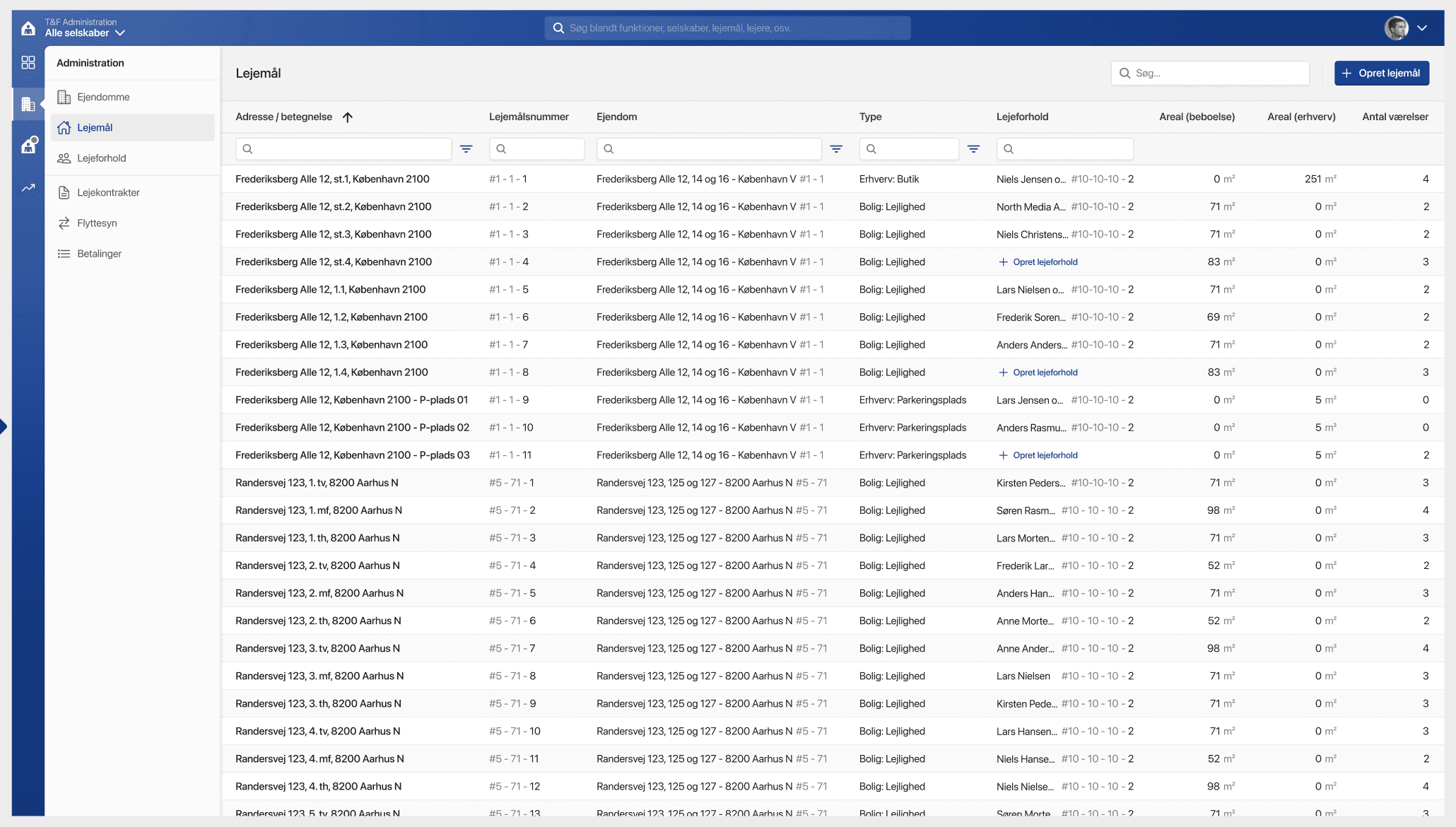
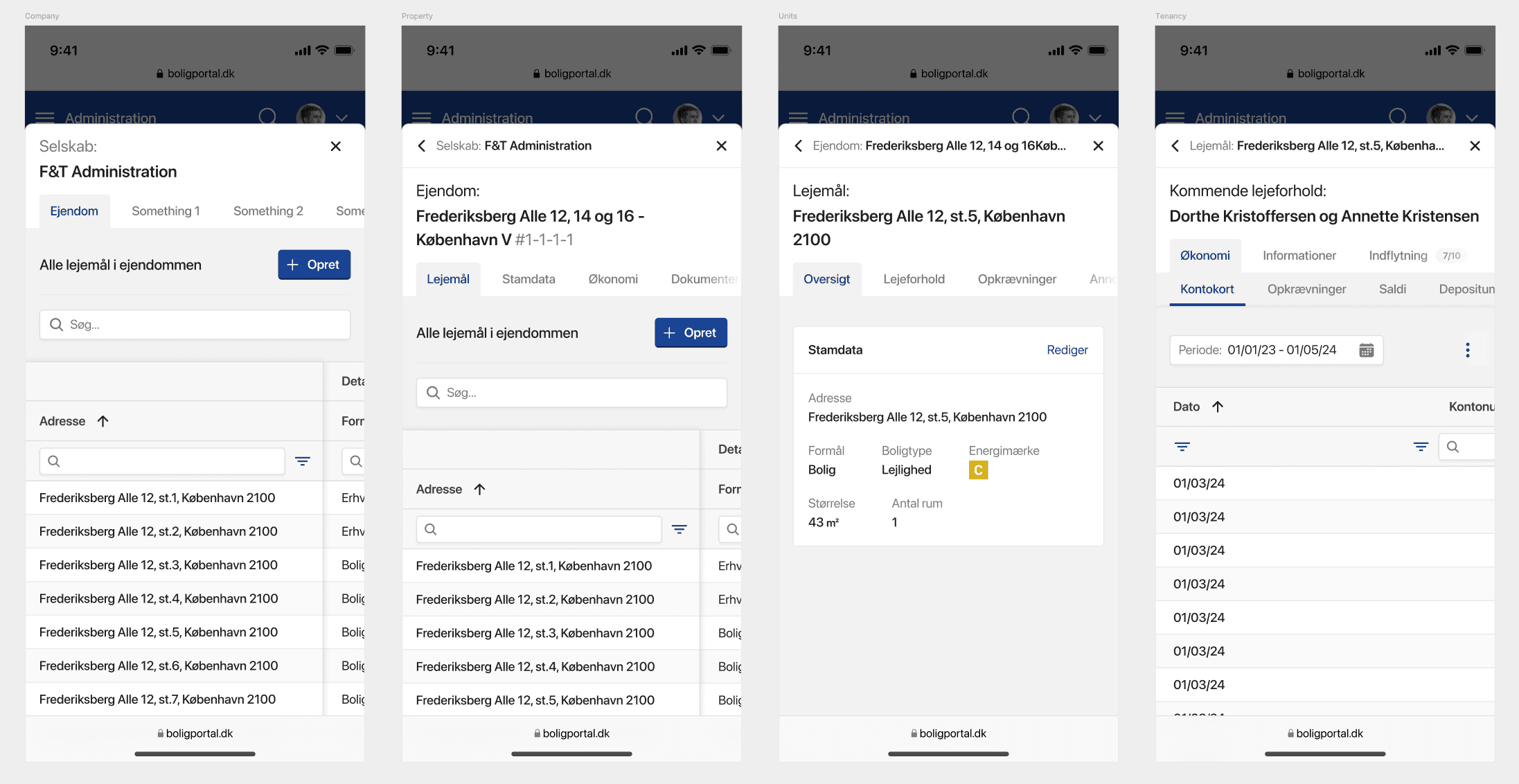
Below, I dug up process images from when we were creating the vision for this platform. They include everything from sketches, prototypes, and concepts to final implementations.